
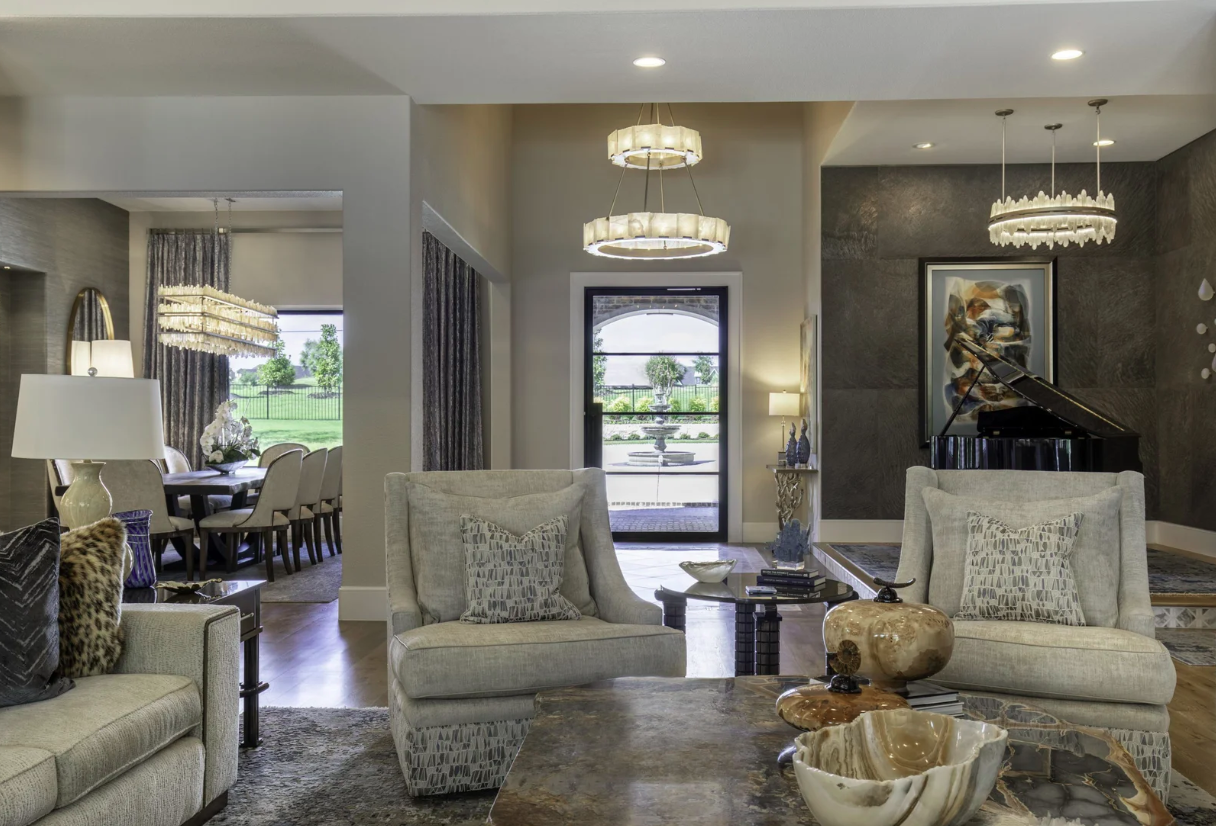
What Ceiling Designs Work Best for Luxury Living Rooms?
Summary: Luxury living room ceilings work best when they respond to room proportions, architecture, lighting, and personal style. Jennifer Colby explores recessed, coffered, timber, sculptural, concealed-lighting, and minimalist ceiling designs. Her approach treats the ceiling as the fifth wall, creating distinctive, functional, timeless interiors where custom furniture, art, textiles, and architecture feel beautifully connected.
Ceilings are having a quieter luxury moment. I see more homeowners treating the fifth wall as architecture, not leftover space. For a refined room interior Highland Park, the right ceiling can change proportion, light, mood, and the entire experience of luxury living.
Why I Treat the Ceiling as the Fifth Wall
When I design a luxury living room, I look upward before I choose the final details. A ceiling is not simply a surface above the furniture. It controls how the room feels.
A poorly scaled ceiling can make an expansive room feel empty. An overly decorated one can compete with commissioned art, custom furniture, or a beautiful view. The goal is balance.
For affluent homeowners, luxury living design should feel personal rather than purchased from a showroom. That is why I consider ceiling height, room width, natural light, furniture scale, architectural style, and the way a family actually uses the room.
The most successful ceiling design is rarely the most elaborate. It is the one that makes every other element feel more intentional.
Which Ceiling Design Works Best for Your Room?
The answer depends on proportion. I would not place a coffered ceiling into every large living room, just because the room is large.
A ceiling should respond to architecture. A compact room may need visual height. A wide room may need structure. A soaring room may need warmth. A formal room may welcome patterns, while a contemporary space may need restraint.
Here is how I compare the most useful luxury ceiling approaches.
Recessed Ceilings: A Quiet Way to Add Depth
A recessed ceiling creates a central area that sits higher or lower than the surrounding border. I like this option when a living room needs depth without heavy ornamentation.
It works especially well with concealed lighting. A soft glow around the recessed edge can wash the ceiling gently, making the room feel wider and calmer.
For a room with generous windows and strong architectural features, this restraint matters. The ceiling supports the design instead of demanding attention.
Coffered Ceilings: When the Room Needs Structure
Coffered ceilings bring rhythm through recessed panels and beams. They can make a large living room feel more composed because the ceiling gains a clear visual grid.
I often consider them for traditional, transitional, and tailored interiors. The key is scale. Small coffers in a grand room can look fussy. Oversized coffers can feel beautifully architectural.
The finish matters, too. Painted millwork creates a crisp effect, while stained wood brings warmth and depth.
Timber Detailing: Warmth Above, Not Weight
Timber can transform a high ceiling that feels cold or distant. Natural wood adds texture, warmth, and an organic note that pairs beautifully with stone, leather, silk, and metal.
I particularly enjoy timber detailing when the living room already has luxurious Brazilian rose furniture. The wood above should complement those pieces without trying to match them exactly.
That distinction creates sophistication. Matching everything is easy. Creating harmony between different materials requires a more careful eye.
Sculptural Ceilings: Make the Architecture the Artwork
Some rooms deserve something unexpected.
A sculptural ceiling can use curves, layered planes, custom forms, or artistic geometry to create a focal point overhead. I use this approach selectively because it can become overwhelming very quickly.
The ceiling should have a reason to exist. Perhaps it echoes the curve of a staircase. Perhaps it softens a rectilinear room. Perhaps it frames a spectacular chandelier.
This is where a bespoke approach becomes powerful. A sculptural ceiling designed specifically for the architecture can feel like part of the original home rather than an added decoration.
And there is one detail I never overlook: the way the ceiling meets the light.
Concealed Lighting: The Luxury You Feel Before You See
Lighting can make or break a ceiling design.
Concealed LED lighting, cove lighting, architectural downlights, and carefully positioned decorative fixtures can reveal ceiling layers without making the technology obvious.
I prefer lighting that feels effortless. You should notice the atmosphere before you notice the fixture.
A beautifully lit ceiling can also support evening entertainment. It can create a softer mood for conversation, highlight commissioned art, or give custom floral arrangements a gentle presence.
This is where the ceiling becomes more than decoration. It starts working for the room.
Minimalist Architectural Planes: Less Can Be Remarkably More
For contemporary luxury homes, I often consider clean architectural planes rather than decorative ceiling patterns.
A simple ceiling with subtle changes in height, recessed lighting, shadow gaps, or carefully aligned planes can feel extraordinarily sophisticated. It gives custom furnishings and art room to breathe.
This approach suits homeowners who prefer modern sensibility without sacrificing warmth. A restrained ceiling can become the perfect background for French textiles, commissioned art glass, sculptural furniture, and other highly personal pieces.
The trick is precision. Minimalism leaves nowhere for poor detailing to hide.
How Do I Choose the Right Ceiling for Room Proportions?
I start with three questions: How high is the ceiling? How wide is the room? What should the eye notice first?
A low ceiling usually benefits from simplicity, light colors, clean lines, and carefully placed illumination. Heavy beams may make it feel lower.
A very tall room can handle stronger architectural gestures. Timber, substantial coffers, layered planes, and larger lighting can bring the scale back to a human level.
A wide room may benefit from a ceiling grid that creates visual order. A narrow room may need longitudinal lines that reinforce its length without making it feel confined.
For room interior Highland Park projects, I also consider the relationship between architecture, furnishings, artwork, and the home’s surrounding character. The ceiling should belong to that story.
What Happens When the Ceiling Becomes Part of the Furniture Story?
This is one of my favorite parts of luxury residential design.
I may begin with a ceiling proportion and then connect it to the furniture layout. A custom sofa grouping might sit beneath a defined architectural plane. A chandelier may center within a coffer. A commissioned art glass piece may catch light from an otherwise concealed source.
Even the smallest details can become connected.
Luxury French textile on chairs, ultra high-end custom upholstery, Brazilian rose furniture, commissioned art, and custom floral work should not feel like separate purchases. They should feel as though they were selected for one home, one family, one point in time.
That is what customised design should accomplish.
A Ceiling Should Look Beautiful Today and Ten Years From Now
Trends can be tempting. I prefer decisions that age well.
A ceiling may be fashionable for a season, but architecture should have longevity. That is why I balance current design thinking with timeless materials, strong proportions, and the homeowner’s personal taste.
My work at Colby Interior Designs centers on distinctive, functional interiors with a modern sensibility, while keeping each client’s personality at the heart of the design.
The result should not scream luxury. It should quietly demonstrate it.
The Best Ceiling Is the One That Feels Like It Belonged There All Along
When a ceiling is properly designed, you may not immediately ask what makes the room beautiful. You simply feel that everything is in its right place.
That is the standard I pursue. I design for the way my clients live, entertain, relax, collect art, and experience their homes. With more than 30 years of experience, I bring that personal perspective to projects ranging from a single room to complete renovations and new homes.
If you are considering a luxury living room transformation, and looking for the best interior designer Highland Park, I invite you to discuss the architecture, proportions, materials, lighting, and details that could make your ceiling distinctly yours. I am Jennifer Colby, from Colby Interior Designs, with 30 years of experience; call (310) 722-4558 or email jennifer@colbyinteriors.com to begin.
Frequently Asked Questions
1. What ceiling is best for a large luxury living room?
Coffered, timber, recessed, and sculptural ceilings can all work well. The best choice depends on ceiling height, room proportions, furniture scale, and the desired visual focus.
2. Are coffered ceilings still suitable for modern luxury homes?
Yes. A simplified coffered design with clean lines and concealed lighting can feel modern, architectural, and elegant without appearing overly traditional.
3. Can concealed lighting make a ceiling look more luxurious?
Yes. Concealed lighting can highlight architectural layers, soften shadows, improve evening ambiance, and create a refined glow without making the lighting itself the main feature.
4. Should the ceiling match the furniture?
Not exactly. I prefer coordination rather than matching. Wood, textiles, metal, stone, and ceiling finishes should relate through tone, scale, texture, or proportion.
5. When should ceiling design be planned during a renovation?
Ideally, ceiling design should be considered early. It can affect electrical work, lighting, millwork, construction details, furniture placement, and the overall architectural plan.