
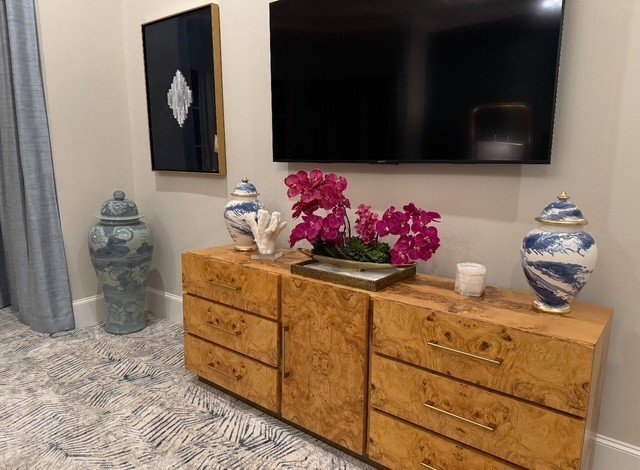
Are Natural Materials Better for Luxury Bedroom Interiors?
Summary: Natural materials can bring warmth, texture, and lasting beauty to luxury bedroom interiors, but they are not always the best choice. Solid timber, natural stone, linen, and wool each offer distinct benefits and care needs. Jennifer Colby balances craftsmanship, sustainability, indoor air quality, climate, budget, and personal style to create distinctive, timeless bedrooms for Dallas homeowners.
Natural materials can bring warmth, depth, and lasting beauty to a luxury bedroom, but the finest interiors balance beauty with performance. In my bedroom interior Highland Park projects, I choose materials for their character, comfort, durability, and suitability for each home.
Which Natural Materials Create a Truly Luxurious Bedroom?
I believe true luxury begins with how a room feels, not how much it costs. The grain of timber, the cool touch of stone, and the softness of linen can make a bedroom feel deeply personal. These details matter in bedroom interior Highland Park design.
Natural materials have small differences in color, grain, and texture. That is their beauty. Yet, I never assume they are always the best choice. I consider how you live, what you love, and how each material will age.
1. Solid Timber or Engineered Wood: Which Should You Choose?
Solid timber brings warmth and individuality to a bedroom. Oak, walnut, and other fine hardwoods have distinctive grain patterns that give bespoke furniture its character. With thoughtful care, quality timber furniture can serve a home for generations.
However, wood responds to moisture and temperature changes. In Texas, where indoor cooling meets humid summers, poorly seasoned timber can warp or crack. I look for stable construction, suitable finishes, and responsible sourcing before specifying a piece.
Engineered wood deserves consideration, too. Quality plywood and veneered panels can provide excellent stability for wardrobes, bedside cabinets, and fitted storage. They may also use wood resources efficiently, depending on their construction and sourcing.
For a statement bed or heirloom dresser, I may favor solid timber. For extensive cabinetry, a carefully selected veneer can deliver the same visual richness with better control over cost and movement.
2. Natural Stone: Is Marble Worth the Investment?
Natural stone adds depth that printed surfaces rarely reproduce convincingly. Marble offers delicate veining, travertine brings earthy texture, and granite provides strength. Each slab has its own pattern, making the finished room feel individual.
Yet stone has practical limits. Marble can stain or etch when exposed to acids, while some porous stones absorb moisture. Sealing helps, but it does not make every surface stain-proof.
For bedside tables, decorative ledges, or fireplace surrounds, I select stone according to its use. Porcelain slabs can be a sensible alternative where easier care, consistent patterns, or a specific budget matters more than natural variation.
3. Linen, Wool, and French Textiles: What Makes Comfort Feel Luxurious?
A bedroom should invite you to slow down. Linen bedding, wool rugs, and beautifully woven upholstery create comfort through texture rather than excess decoration. They soften hard architectural lines and make even a spacious bedroom feel welcoming.
Natural fibers also have different strengths. Linen feels crisp and relaxed, while wool offers warmth and resilience. Both need care suited to their weave, color, and finish. Some fabrics shrink, fade, or stain more easily than others.
I love the character that luxury French textiles can bring to a custom chair. Paired with tailored draperies and a quiet wool rug, the fabric becomes part of a carefully balanced design. For busy homes, I may choose a durable performance fabric in areas prone to spills.
The secret is not choosing the most expensive textile. It is choosing one that feels wonderful, wears well, and suits your everyday life.
Are Natural Materials Better for Indoor Air Quality?
Material choice can affect indoor air quality, but the label natural does not guarantee a healthier room. Wood, stone, wool, and linen each have different properties. Finishes, adhesives, dyes, and cleaning products matter, too.
Some engineered wood products can release formaldehyde from their binders. I therefore review emissions information and look for relevant certifications, such as GREENGUARD Gold, where appropriate. Low-emission adhesives and finishes can also help reduce indoor pollutants.
Natural stone is generally low-emitting, but installation products still matter. Wool and linen may be treated with dyes or protective coatings. I ask what has been added, rather than judging a material by its name alone.
For a restful bedroom, I consider the complete specification. Better material choices, good ventilation, and careful installation work together. No single fabric or finish can promise perfect indoor air quality.
How Do I Select Materials for a Luxury Dallas Home?
I begin with the room, the architecture, and the people who will use it. A serene primary bedroom has different needs from a guest suite, a child’s room, or a busy family retreat.
In Highland Park, Preston Hollow, and other Dallas neighborhoods, I consider natural light, room size, air conditioning, humidity, and the home’s existing finishes. These factors affect how materials look, feel, and perform over time.
For a refined room interior Highland Park project, I might pair warm timber with soft linen, introduce stone through carefully chosen accents, and commission artwork that brings the client’s personality into the space.
Budget matters just as much as beauty. I help clients decide where premium materials will make the greatest difference. A custom timber bed, exceptional upholstery, or commissioned light fixture may deserve more investment than a decorative surface used less often.
This is where bespoke design changes everything. Instead of buying matching pieces from a single collection, I can combine custom furniture, carefully sourced antiques, commissioned art glass, and individual finishes. The result feels collected rather than purchased all at once.
What Makes Bespoke Materials Worth the Investment?
There is a particular pleasure in owning something made specifically for your home. Brazilian rosewood furniture, where legally sourced and available, can offer remarkable grain and richness. Its sourcing requires particular care because the species is subject to international trade controls.
I also love the effect of a chair upholstered in fine French fabric or a light fixture created by an artisan. These details bring personality to a room without relying on passing trends.
Custom work does require planning. Lead times, material availability, craftsmanship, and installation can affect both cost and schedule. I discuss these factors early, so clients understand the choices before approving the design.
My role is to connect each detail to a larger vision. The furniture, fabrics, lighting, and art should speak to one another while reflecting the people who live there.
Conclusion: Choose Materials That Tell Your Story
Natural materials offer warmth, character, and lasting appeal, but thoughtful sourcing, suitable alternatives, and expert planning create the best luxury bedrooms.
I am Jennifer Colby, from Colby Interior Designs, and I bring over 30 years of experience to personalized residential interiors. If you are planning a bedroom refresh, a complete renovation, or a new home, I invite you to discuss your vision with me. Call (310) 722-4558 or email jennifer@colbyinteriors.com to explore a design tailored to your home and lifestyle.
Frequently Asked Questions
1. Are natural materials always better for luxury bedroom interiors?
No. Natural materials offer distinctive textures, but quality engineered alternatives can provide greater stability, easier care, and better value in specific applications.
2. Which natural materials work best in a luxury bedroom?
Solid timber, linen, wool, and suitable natural stone are excellent options. The best combination depends on comfort, durability, maintenance, climate, and your design preferences.
3. Are natural materials more sustainable than engineered alternatives?
Not always. Sustainability depends on responsible sourcing, manufacturing, durability, emissions, transport, and product lifespan rather than whether a material is natural.
4. How can I protect natural materials in a Texas home?
Maintain stable indoor conditions, use suitable finishes, follow care instructions, and select materials designed to handle local humidity and everyday wear.
5. Can luxury bedroom design fit a defined budget?
Yes. I prioritize the elements that matter most, explore suitable alternatives, and plan custom details carefully to balance quality, personal style, and overall project costs.